A Series of Experiments in Art Distribution on Bitcoin
Following the release of Buidlings, my genesis collection on Bitcoin Ordinals, the Megastructures series emerged as an ongoing experimental project I’ve been developing in parallel with my other work. Each Megastructure introduces a new artwork, a new approach to distribution, and a new layer of experimentation with Bitcoin-native protocols and tools.
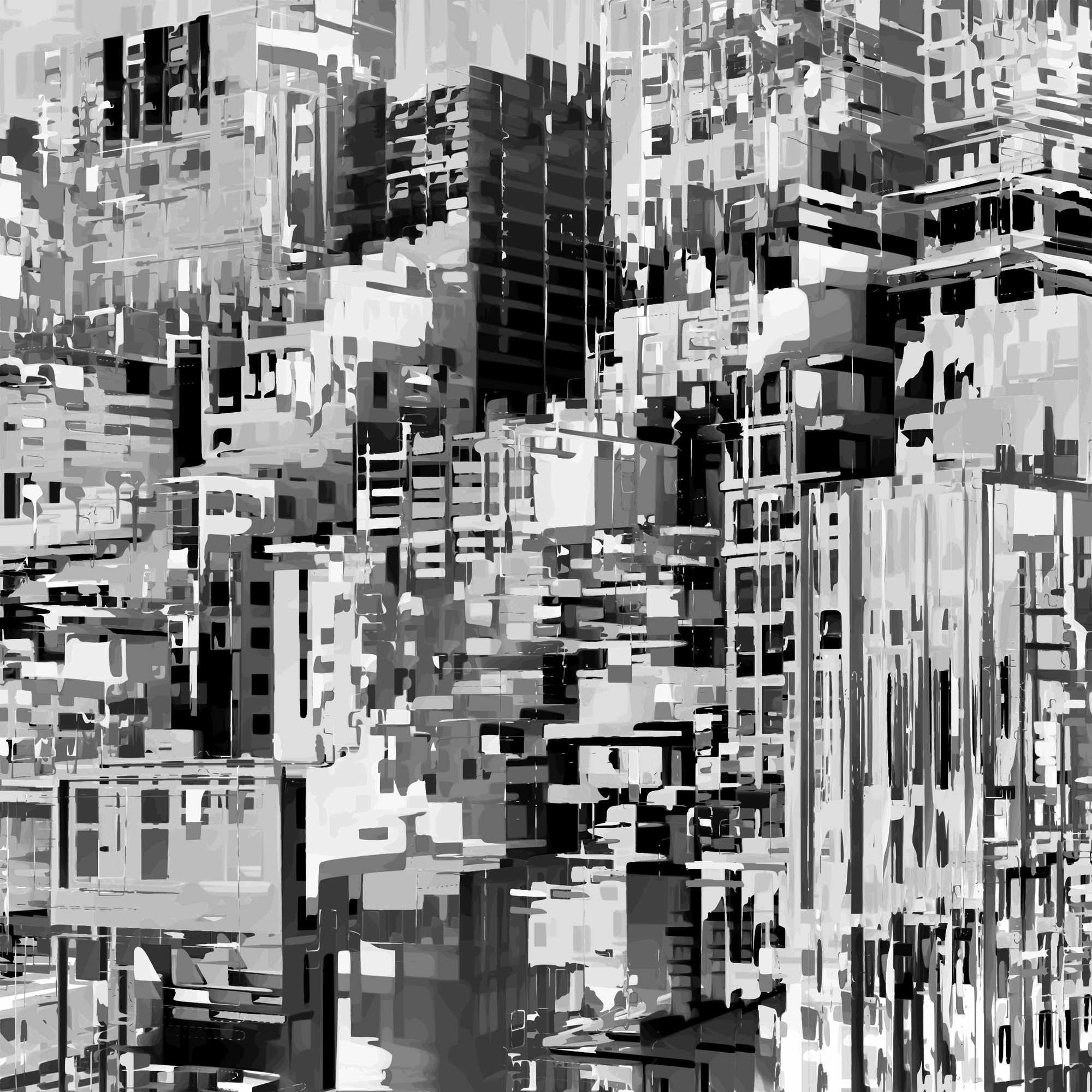
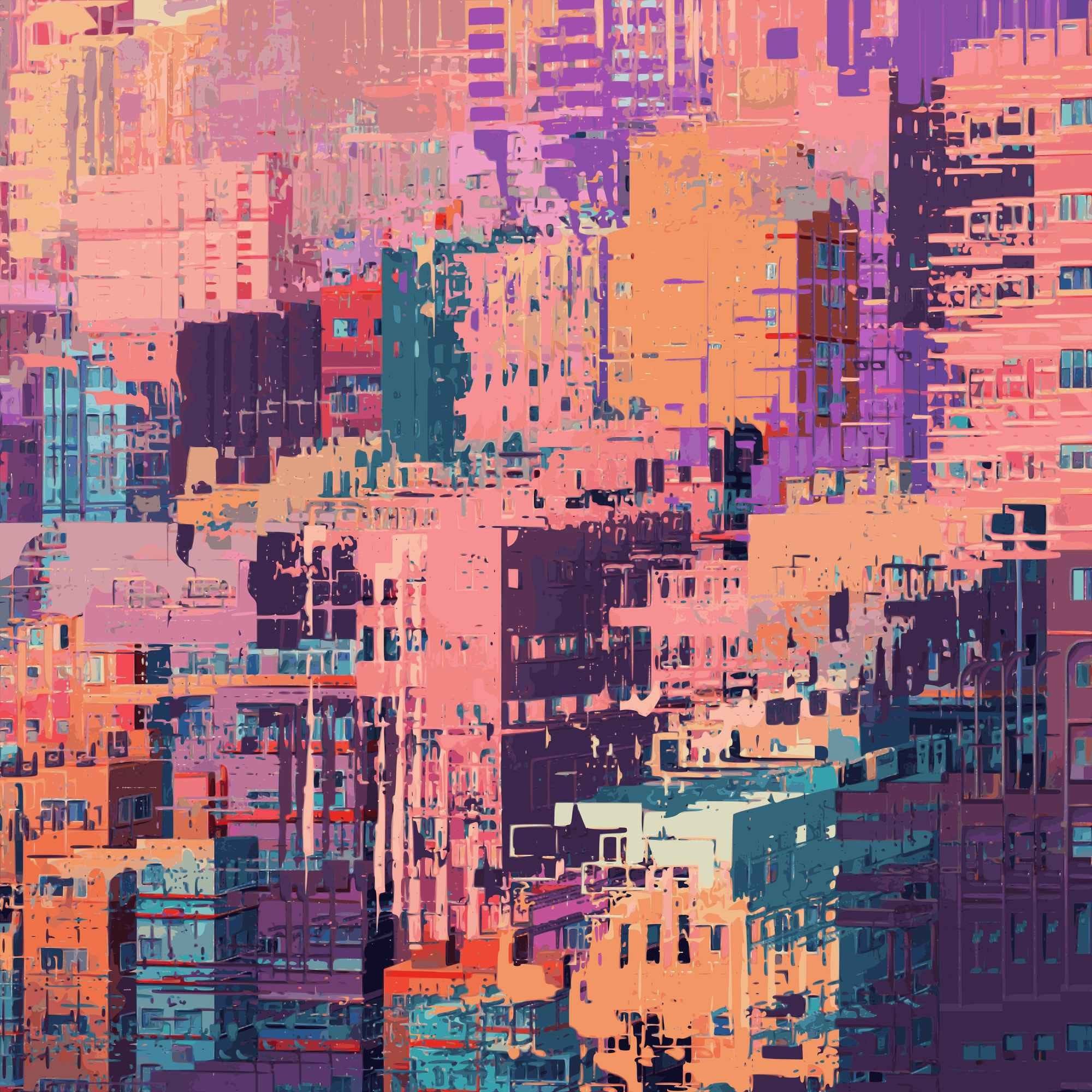
The artworks combine AI-assisted generation with hand-crafted digital collage and vector work, resulting in abstract, heavily textured compositions reminiscent of tower blocks, urban grids, or glitchy, otherworldly constructions. These visual “megastructures” mirror the conceptual foundations of the project: exploring new ways to structure art distribution at scale, directly on-chain.
To emphasise their open-ended nature and my trial and error approach to this collection, all Megastructures edition runs were made available for free, whether through airdrops, burns, or public mints. Experimentation and accessibility were at the core of this series.
Each iteration was also automatically distributed to every Buidlings collector, as a token of appreciation for their early support.
Megastructure #1
- Protocol: Tap
- Tools: Trac, Tap internal functions, inscription services
- Supply: 450
- Distribution: Tap token airdrop
- Date: August 2023
- Notable: First ever Tap Art airdrop
- Resolution: 2000 x 2000
- Ticker: TAPART Megastructure#1 26697122
Megastructure#1 marked the debut of the series. It was the first Tap Art edition airdrop, delivered in a single internal transaction using the token-send function of the Tap protocol. I distributed 429 editions to $buidl holders (an early experimental Tap token), 10 to Buidlings holders, and kept the remaining supply for vaulting, gifting, or future use.
Each edition is technically a balance within the Tap ledger. It links textually to the original ordinal inscription, making it neither a visual edition nor a simple fraction of ownership, but something conceptually in between. Tap is an account-based metaprotocol on Bitcoin L1, operated by Trac, and leveraging ordinal inscriptions.
Tap Art tokens, preceding the now more commonly adopted DMT and UNAT approach, were deployed using a simple JSON structure:
{
          "p": "tap",
          "op": "token-deploy",
          "tick": "TAPART<freestyle name><ordinal number>",
          "max": "1",
          "lim": "1"
        }
This first experiment demonstrated Tap’s potential for low-cost, immutable, and scalable art distribution, while also raising early questions about the ledger-based nature of ownership here, vs inscribing the artwork directly into recipients’ wallets.
Megastructure #2
Summary:
- Protocol: Ordinals
- Tools: Gamma Launchpad, SVG delegates
- Supply: 100 (85 circulating + 15 burned)
- Distribution: Public mint on Gamma
- Date: November 2023
- Notable: Public mint
- Resolution: 2000 x 2000
Megastructure #2 was minted through a traditional public mint interface on Gamma, with each edition inscribed as a lightweight SVG file that recursively calls the original image. These delegates are pointing directly to the source inscription for rendering.
Although 100 editions remain inscribed, 15 of them were later sent to Satoshi’s wallet as part of the Megastructure #3 claim process, effectively locking them forever. This introduced a layer of gamification to the project’s evolving distribution model. Announced while the Megastructure #2 mint was ongoing, it allowed collectors to make calculated choices and plan (or not) for the upcoming burn event.
Megastructure #3
Summary:
- Protocol: Ordinals
- Tools: Bestinslot.xyz, Generatord.io
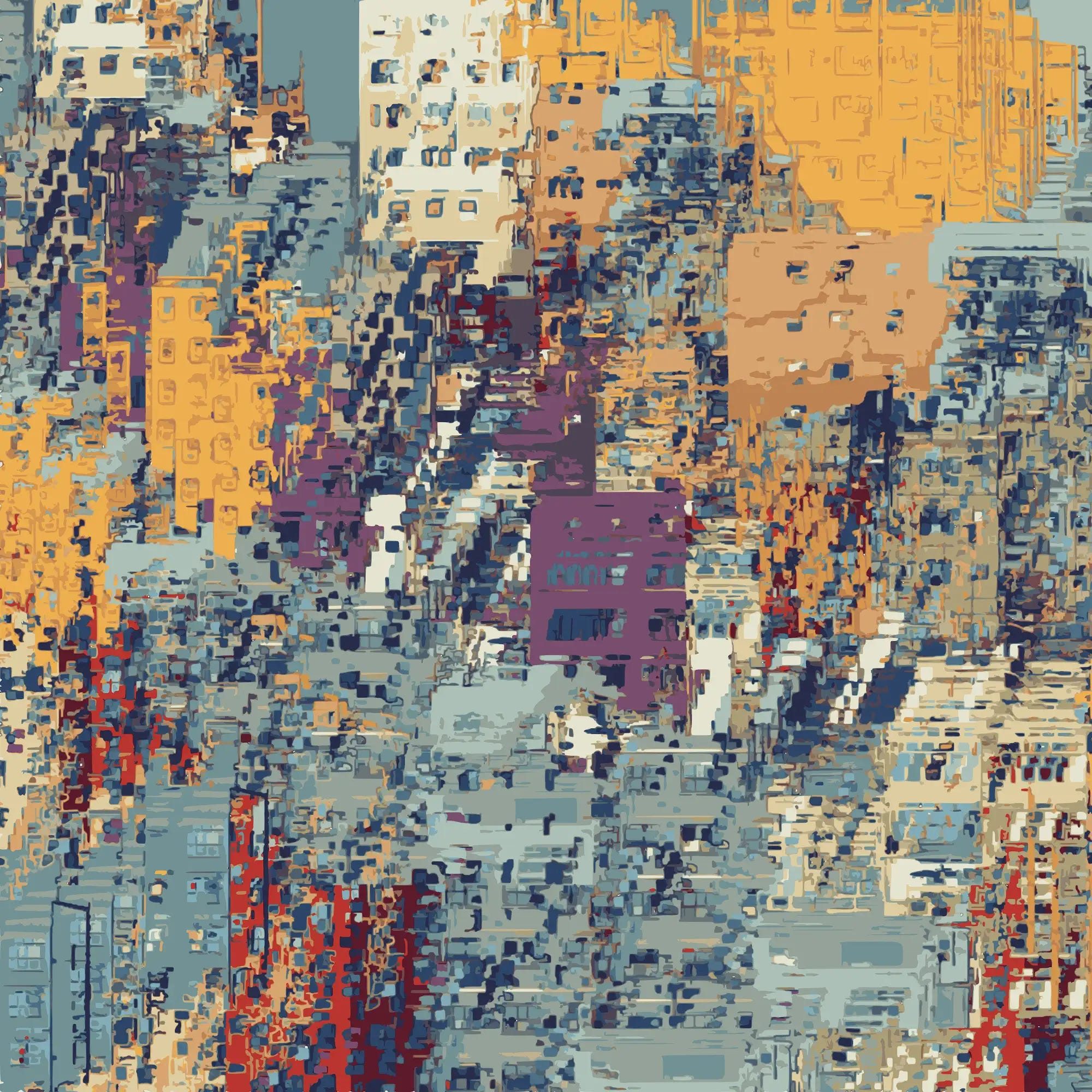
- Supply: 25
- Distribution: Burn-to-claim (airdrop based on burn order)
- Date: February 2024
- Notable: Smallest supply run in the series
- Resolution: 2000 x 2000
Megastructure #3 could only be acquired by burning Megastructure #2 editions during a set, 1-week long, claim window. Collectors were instructed to send their editions to Satoshi’s wallet address (1A1zP1eP5QGefi2DMPTfTL5SLmv7DivfNa), the only available burn method at the time.
I tracked the burns on Bestinslot.xyz and the airdrop was later fulfilled using Generatord.io. Editions were numbered according to the burn order (excluding one test mint), and 10 additional copies were created for Buidlings holders. No burns occurred after the window closed.
This experiment invited participants to actively engage with supply evolution through a time-sensitive decision, bridging interactivity, scarcity, and technical considerations.
Megastructure #4
Summary:
- Protocol: Runes
- Tools: Ord Client (etching); any rune-compatible frontend (minting)
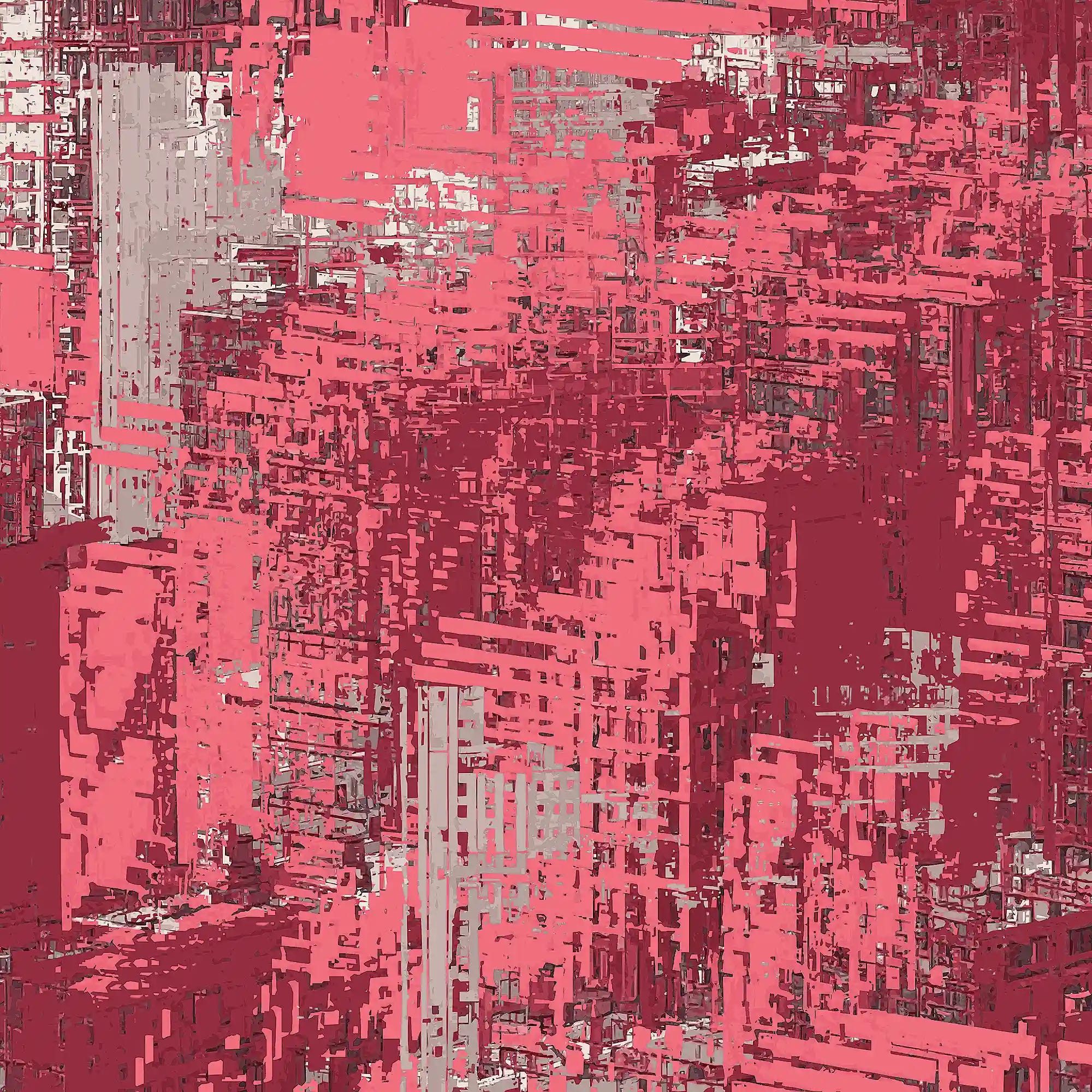
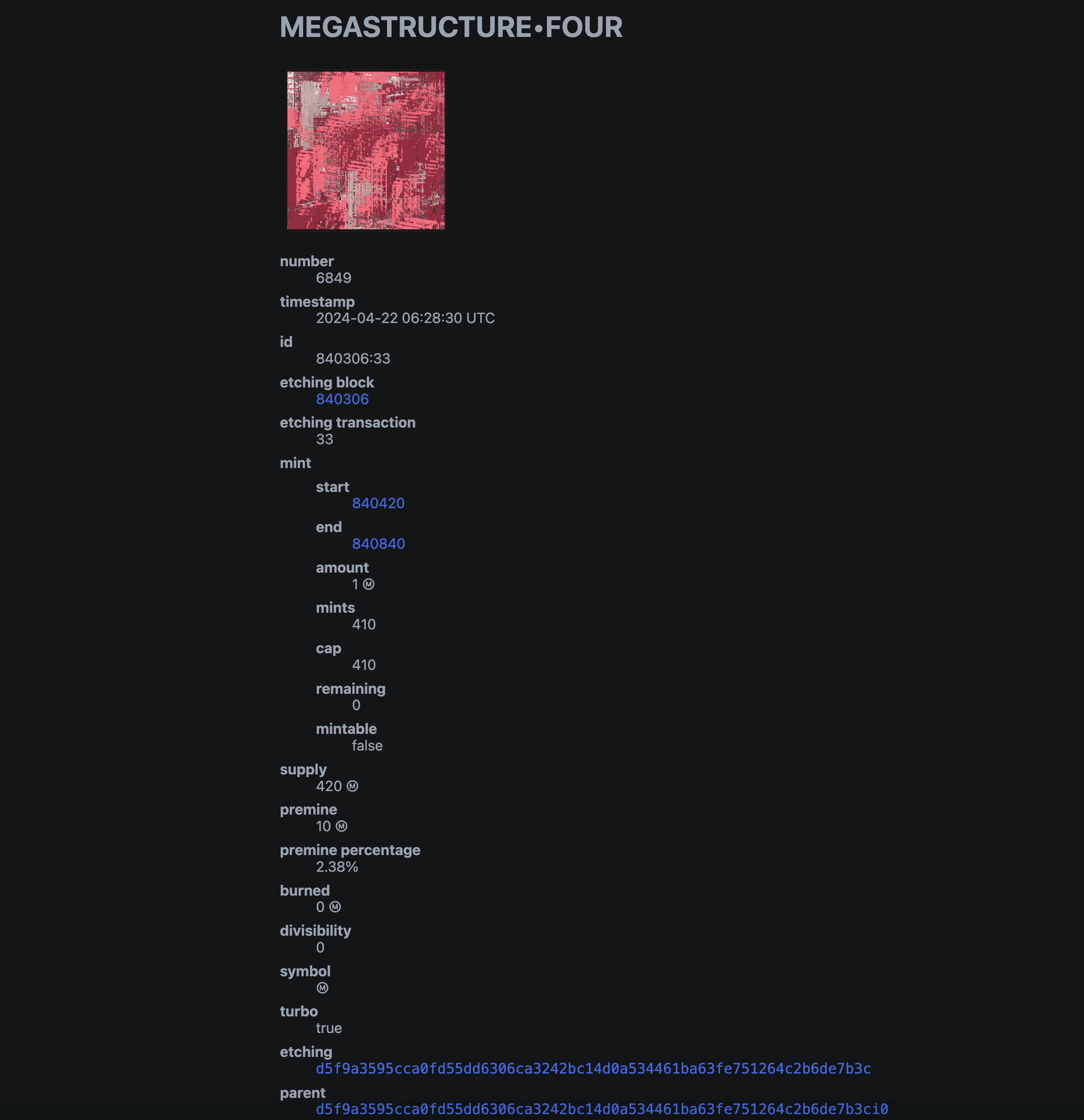
- Supply: 420
- Distribution: Public mint from block 840420
- Date: April 2024
- Notable: Early use of Runes for serialised art
- Resolution: 2000 x 2000
- Ticker: MEGASTRUCTURE•FOUR (Rune #6849)
MEGASTRUCTURE•FOUR introduced the series to the Runes protocol, Bitcoin L1’s fungible token standard. Runes allow the creation and minting of tokens with defined supply, divisibility, and metadata, offering infrastructure for a wide range of tokenised use cases.
This edition was among the first art-focused uses of Runes, with a configuration of non-divisible tokens (divisibility = 0) and 1 mint per transaction. I etched it and it was then available for mint through any compatible interface. The final supply was distributed across 173 wallets over 7 blocks, with 10 being premined for Buidlings holders.
The non-divisibility (no decimals) is what allowed it to come close to the idea of edition, with each token acting as a full representation of the artwork. Tokenisation, however, alongside true fungibility (no unique identifier per token) positioned it closer to the concept of fractionalisation.
Megastructure #5
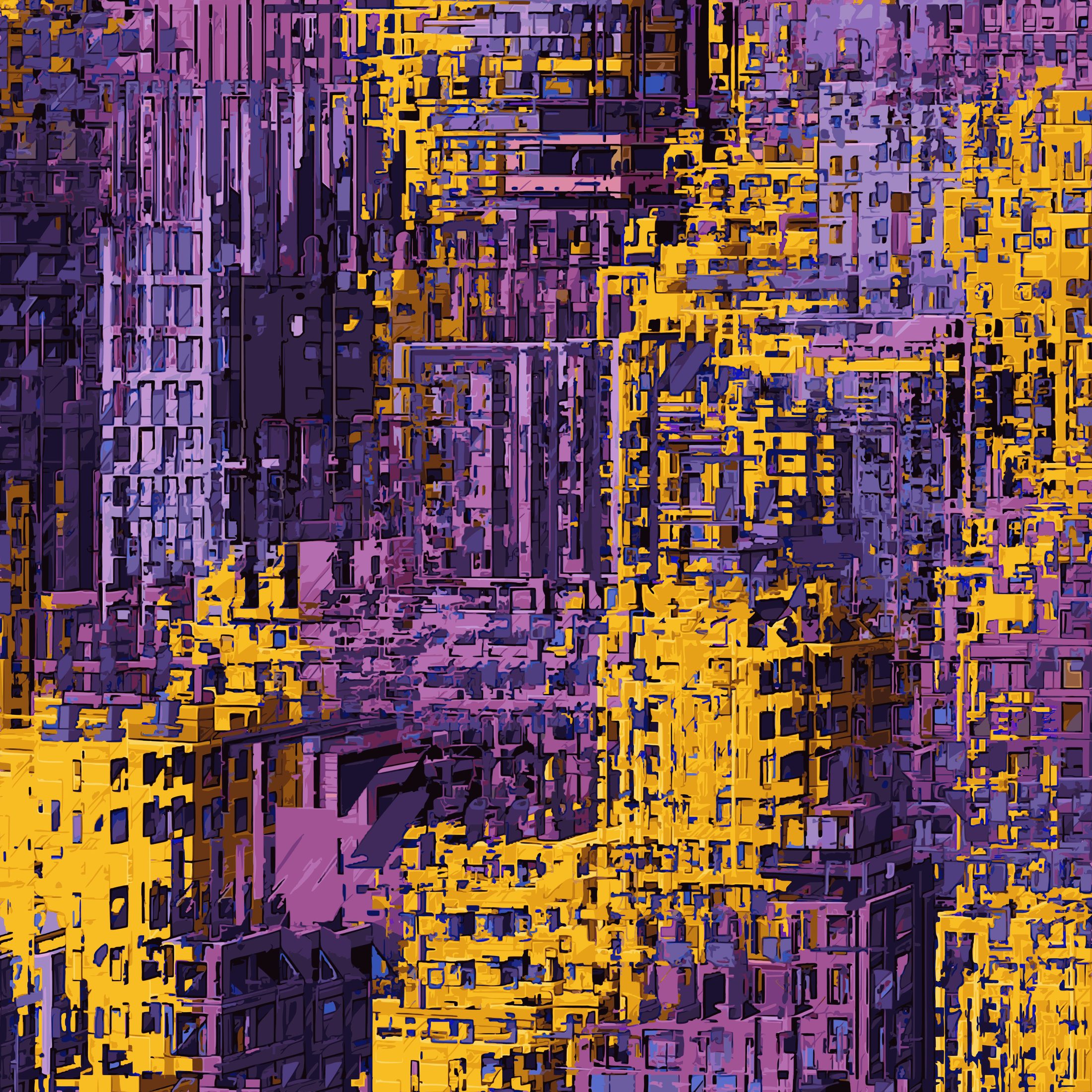
Summary:
- Protocol: Ordinals
- Tools: Oviato’s “Inscribe Large AF Images”
- Supply: 100 image fractions (WEBP, 600x600)
- Distribution: TBD
- Date of creation: August 2024
- Notable: Fully on-chain recursive composition
- Resolution: 6000 x 6000 (assembled)
- File sizes: Each WEBP ~30–40 KB, final PNG 39.4 MB
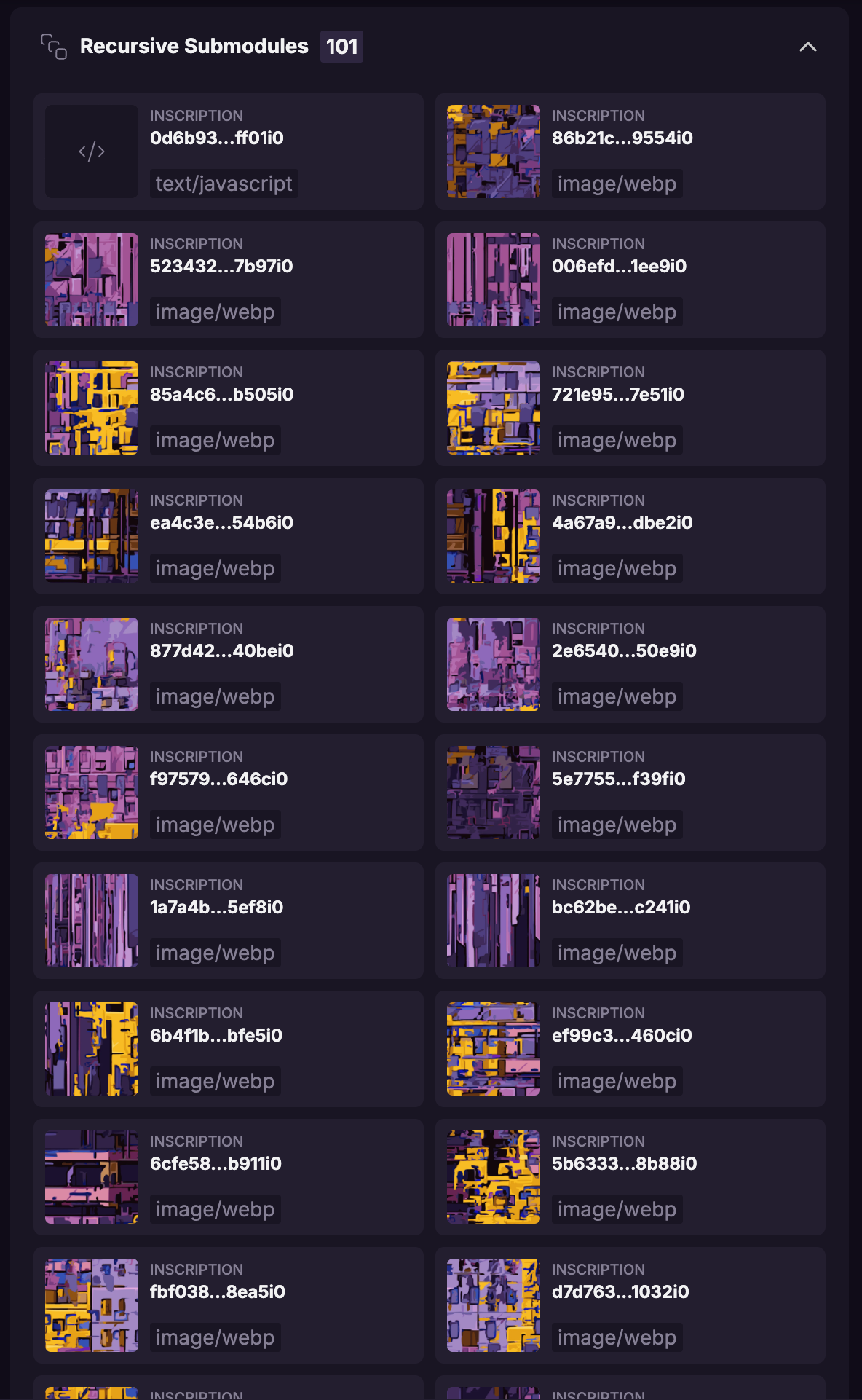
Megastructure #5 is an exploration of scale and fidelity in Bitcoin-native art. Composed of 100 individually inscribed image fractions (WEBP, 600x600), the work is assembled into a single high-resolution 6000x6000 PNG using a recursive HTML inscription. This allows to bypass the protocol’s file size limitations, in addition to fractionalising the artwork.
Using Oviato’s “Inscribe Large AF Images” tool and inspired by pioneering experiments, I was able to inscribe the entire structure natively on Bitcoin, directly accessible and immutable on chain. The project demonstrates that high-resolution art at scale is not only possible on Bitcoin, but elegantly achievable using the right tools.
In terms of chronology, this attempt differs from the others: the fractions must be inscribed first, to allow the code to then use them recursively. It poses new questions about their very nature, since the artwork cannot exist without them. Are the fractions the artwork, or are they mere fragments, process artifacts?
Conclusion
The Megastructures series is both a conceptual and technical journey. It combines my ongoing exploration of architecture and digital image manipulation with experimental, protocol-specific distribution systems. Each chapter introduces a new format, tool, or challenge, all integral to the broader exploration of how to share and experience art at scale, natively on Bitcoin. Along the journey, many questions arose, with no definite answers.
➯ Do editions have to be one-to-one copies of the same artwork? Each token with a unique identifier, and an individual copy of the art, reproduced?
➯ Can fungible tokens act as editions? A token functioning as a pointer, just like nfts would point to an image elsewhere?
➯ Are these tokens fractions rather than editions? One artwork divided into smaller pieces through decentralised ownership?
➯ Speaking of ownership, do token holders own the art? Perhaps a fraction of it? Or a copy?
➯ Digital ownership and scarcity are two key considerations in the web3 art world. Everyone knows NFTs aren’t just right click saved, copy pasted jpegs. Does fungibility clash with the very concept of blockchain art?
While I don’t plan on releasing any more Megastructures for the time being, new distribution systems might emerge, potentially leading to more pieces being added to the series.
The originals exist as a distinct layer of the series and are now available to collect on Gamma.io. As for the distributed runs, they remain a public exploration of creative tools and protocols shaping Bitcoin’s cultural layer.
Art is buidling 🏗️
https://gamma.io/ordinals/collections/megastructures-originals/items